


Following meticulous and self-created methodologies, Gabriel de la Mora researches, collects, classifies, catalogs, and manipulates remarkably diverse materials. These materials are familiar, sourced from quotidian objects—his ongoing series The weight of thought, for example, repurposes leather and rubber shoe soles. de la Mora’s materials of choice are those often considered waste or residue: collected artifacts and antiques, obsolete mechanical and utilitarian objects, parts, corporeal matter, architectural scrap. Through these, the artist explores finitude and permanence, the passing of time, it’s bracketing, and the transformation of matter and energy alike. The formal outcome of these processes plays with pre-established notions of drawing, painting, and sculpture. Characterized by their visual potency, the resulting bodies of work complicate theoretical and historical art terms (the ready-made, the objet-trouvé, the monochrome, the peinture en plein air, among others). As such, they establish an ironic spin on the abstract and minimalist aesthetics and inquire about the ever-changing notion of painting as a phenomenon. Can painting originate itself with the passing of time and without any intervention from the artist’s hand? This apparent negation of painting and other ontological musings formulated by de la Mora’s oeuvre is extended to artistic practice at large: When is an artwork born and when does it reach its conclusion? What is the role of the artist within the creative act? Coupled with equally methodical and strict processes, Gabriel de la Mora has constituted a practice in which the role of the artist is not to create nor to destroy, but to transform.
Gabriel de la Mora was born on September 23, 1968 in Mexico City, where he lives and works. He earned an MFA in Painting (2001-03) from Pratt Institute, NY and a BFA in Architecture (1987-91) from Universidad Anáhuac del Norte, Mexico City. He has been a Fulbright García-Robles grant recipient, a grantee from the Jacques and Natasha Gelman Foundation, and a member of the National System of Creators-FONCA (2013-15), Mexico.
His work is part of public and private collections in Mexico and abroad, among them: Fundación/Colección JUMEX, Museo de Arte Contemporáneo Internacional Rufino Tamayo, Museo de Arte Carrillo Gil, Museo Universitario Arte Contemporáneo-MUAC, and Museo de Arte Moderno, Mexico City; Museo Amparo, Puebla, Mexico; Museum of Contemporary Art-MOCA, Los Angeles, CA; The Museum of Fine Arts, Houston, TX; El Museo del Barrio, NYC, NY; Albright-Knox, Buffalo, NY; Perez Art Museum, Miami, FL; Speed Art Museum, Louisville, KY; Centro Gallego de Arte Contemporáneo, Santiago de Compostela; Colección Banco de la República and Museo de Arte Moderno de Bogotá, Bogotá; Museo de Arte Latinoamericano-MALBA, Buenos Aires, M+ Hong Kong, China.
He is represented by PROYECTOS MONCLOVA (Mexico City),PERROTIN (Paris, New York, Seoul, Tokyo, Shanghai, and Hong Kong), Sicardi Ayers Bacino (Houston) and Simões de Assis (Curitiba, Brazil)
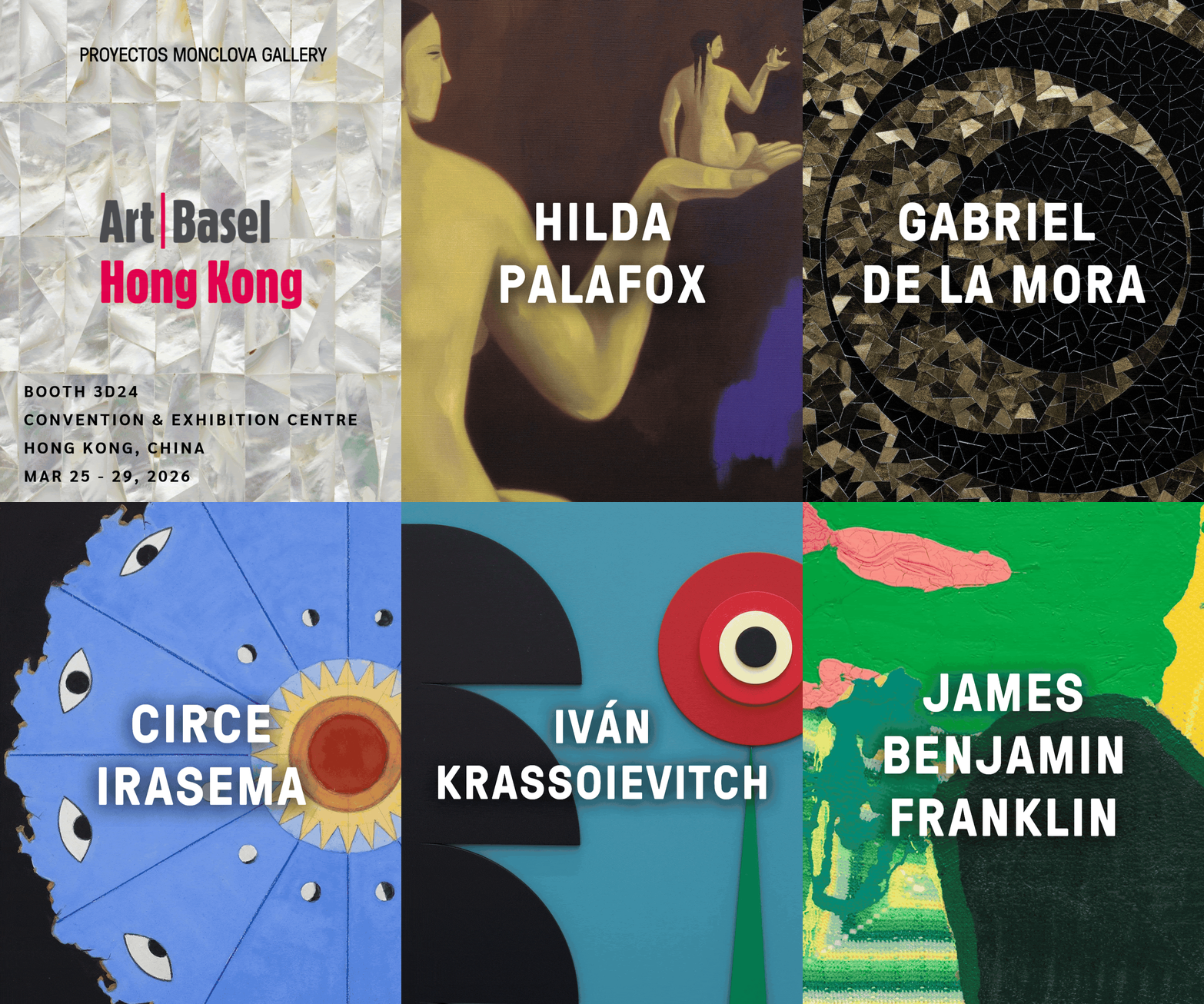
Proyectos Monclova Gallery announces its participation in the 2026 edition of Art Basel Hong Kong, which will take place from March 25 to 29. On this occasion, the gallery presents an intergenerational selection that brings together key practices in contemporary Mexican, Latin American, and American art, featuring works by James Benjamin Franklin, Circe Irasema, Iván Krassoievitch, Macaparana, Gabriel de la Mora, Hilda Palafox, and Eduardo Terrazas.
With this proposal, Proyectos Monclova Gallery reaffirms its commitment to working with artists across different generations, from established figures to voices that continue to expand the languages of contemporary art through critical and experimental perspectives.
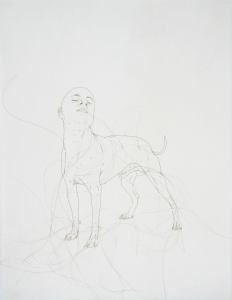
Gabriel de la Mora
Self-portrait as a dog, 2007
Pelo humano sobre papel / Human Hair on paper
Dimensions: 23 x 21.5 cm/ 9.05 x 8.5 inches
Proyectos Monclova Gallery is pleased to announce its participation in TEFAF Maastricht 2026, one of the most important and prestigious international art fairs. For this edition, the gallery will present a carefully curated selection of works by Ángela Gurría, Eduardo Terrazas,
Abel Quezada, and Gabriel de la Mora,key artists whose practices engage with abstraction, material research, conceptual thinking, and the history of modern and contemporary art in Mexico.
This presentation highlights the historical and conceptual strength of the gallery’s program, underscoring the relevance and continued resonance of these artists within an international context.
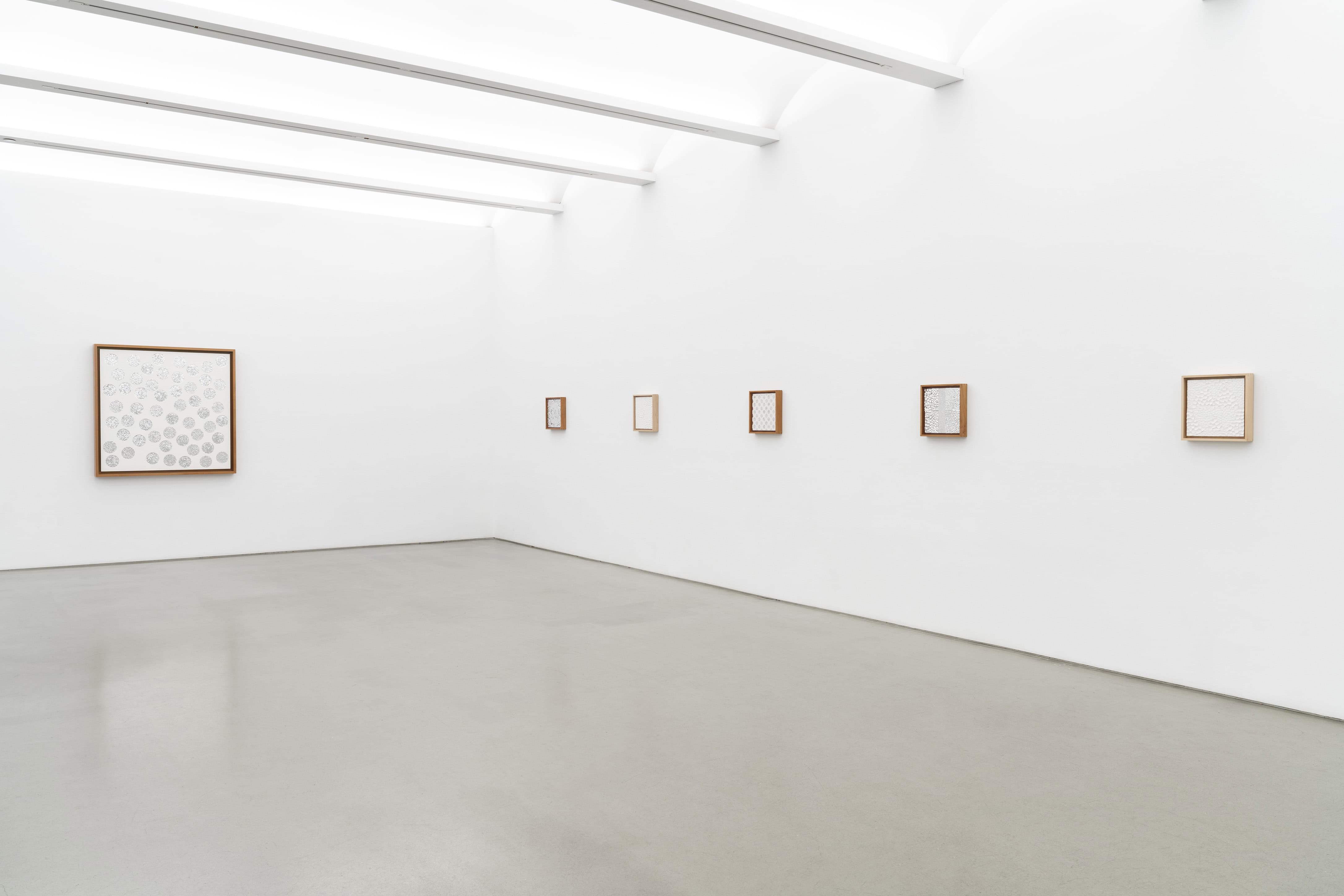
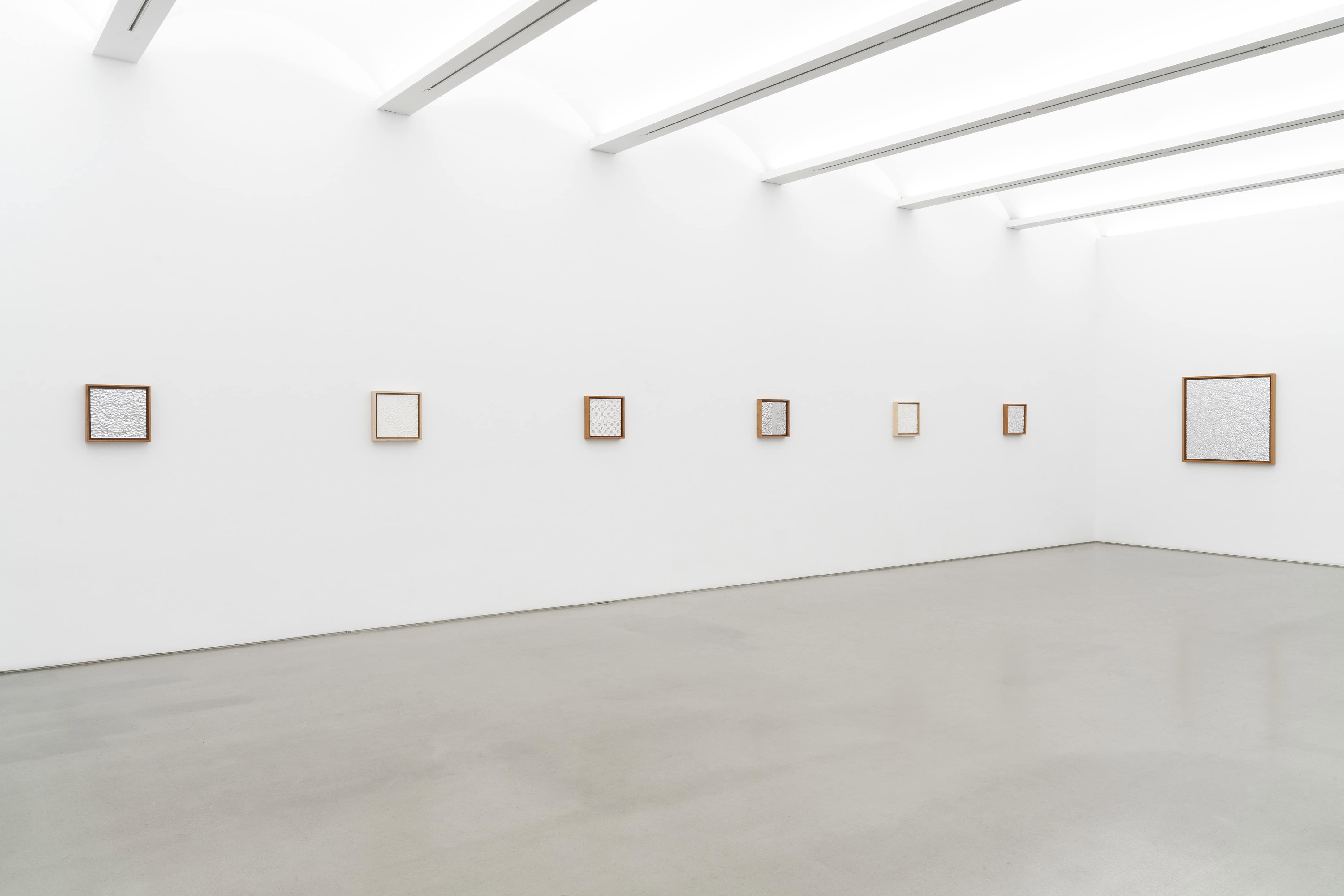
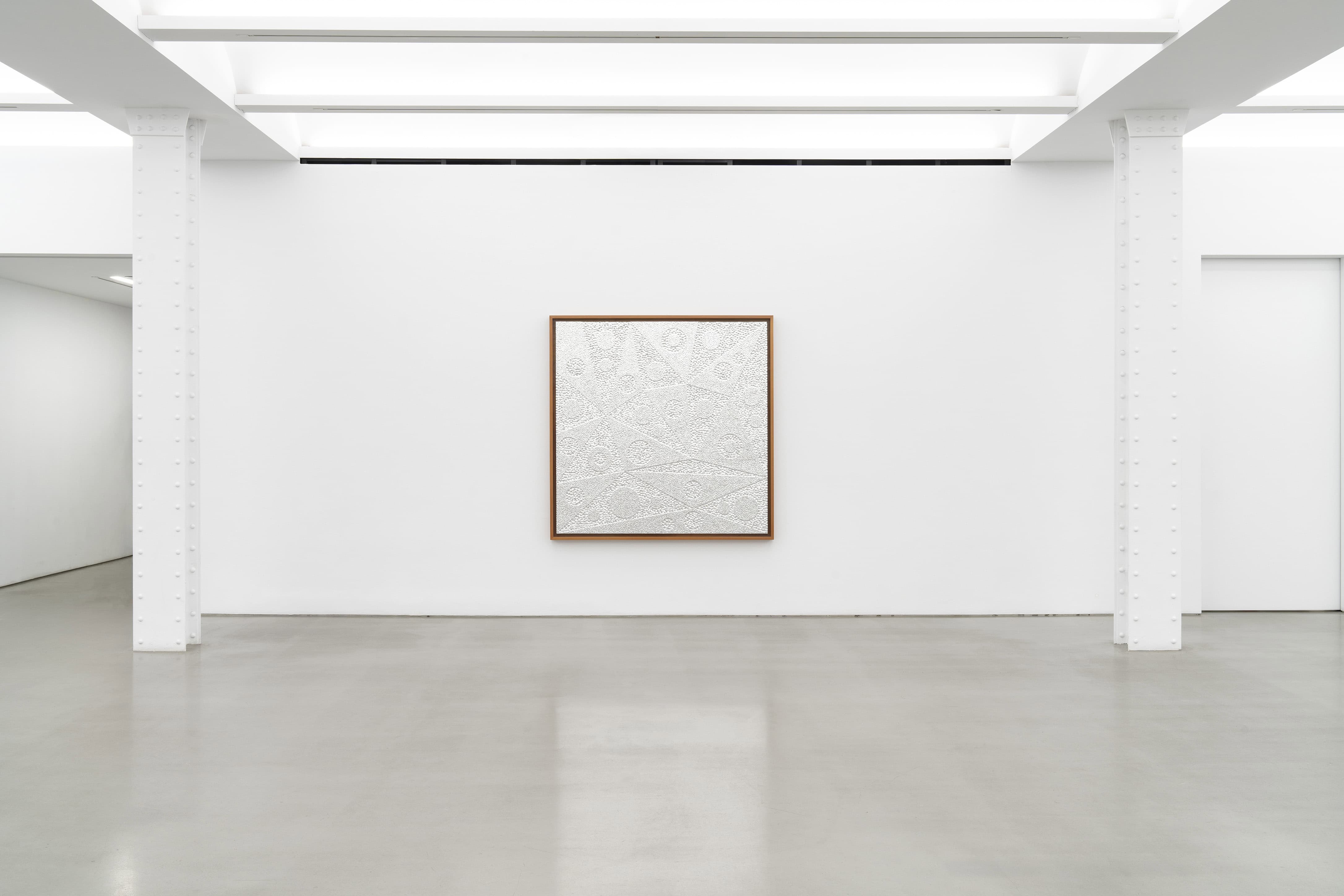
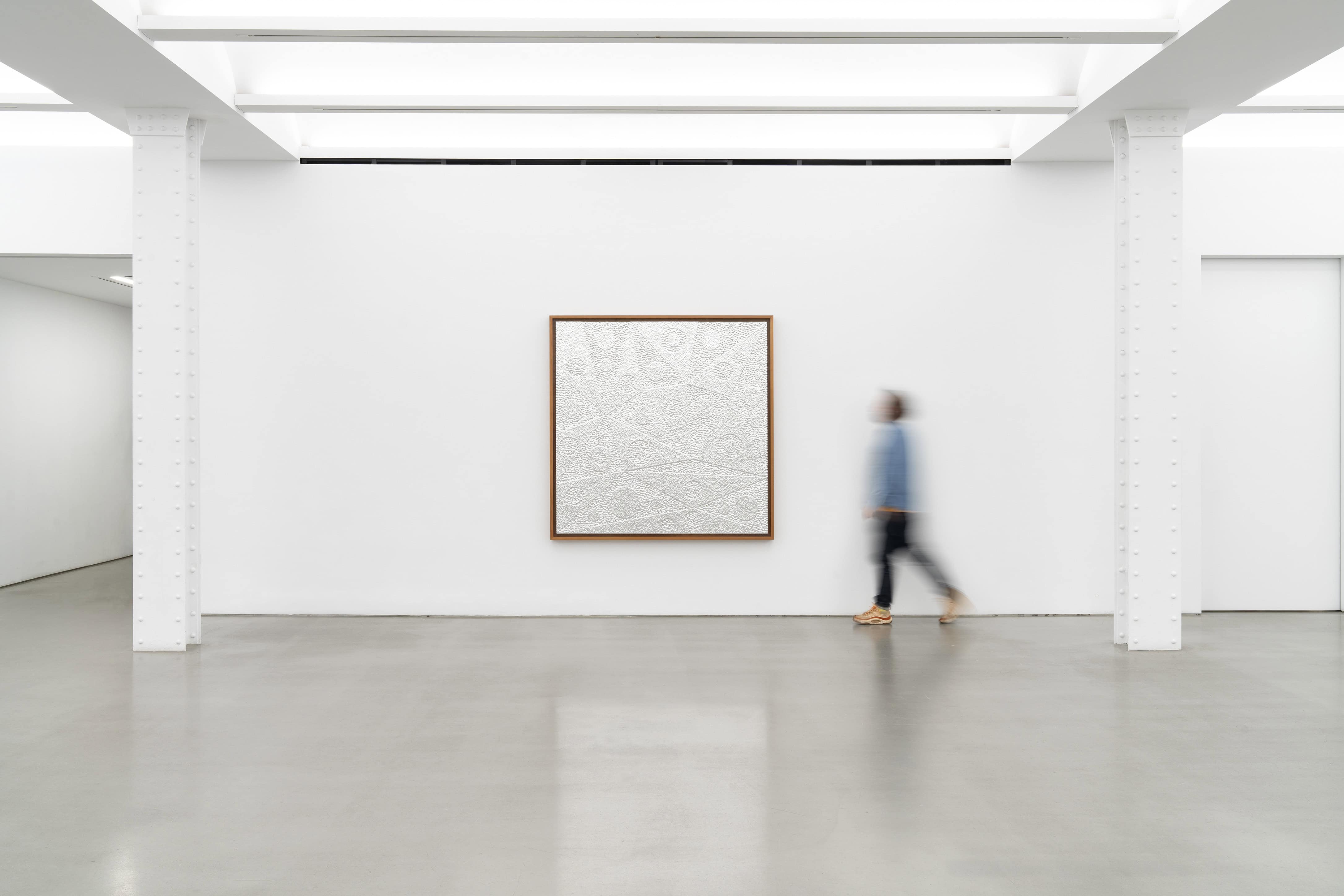
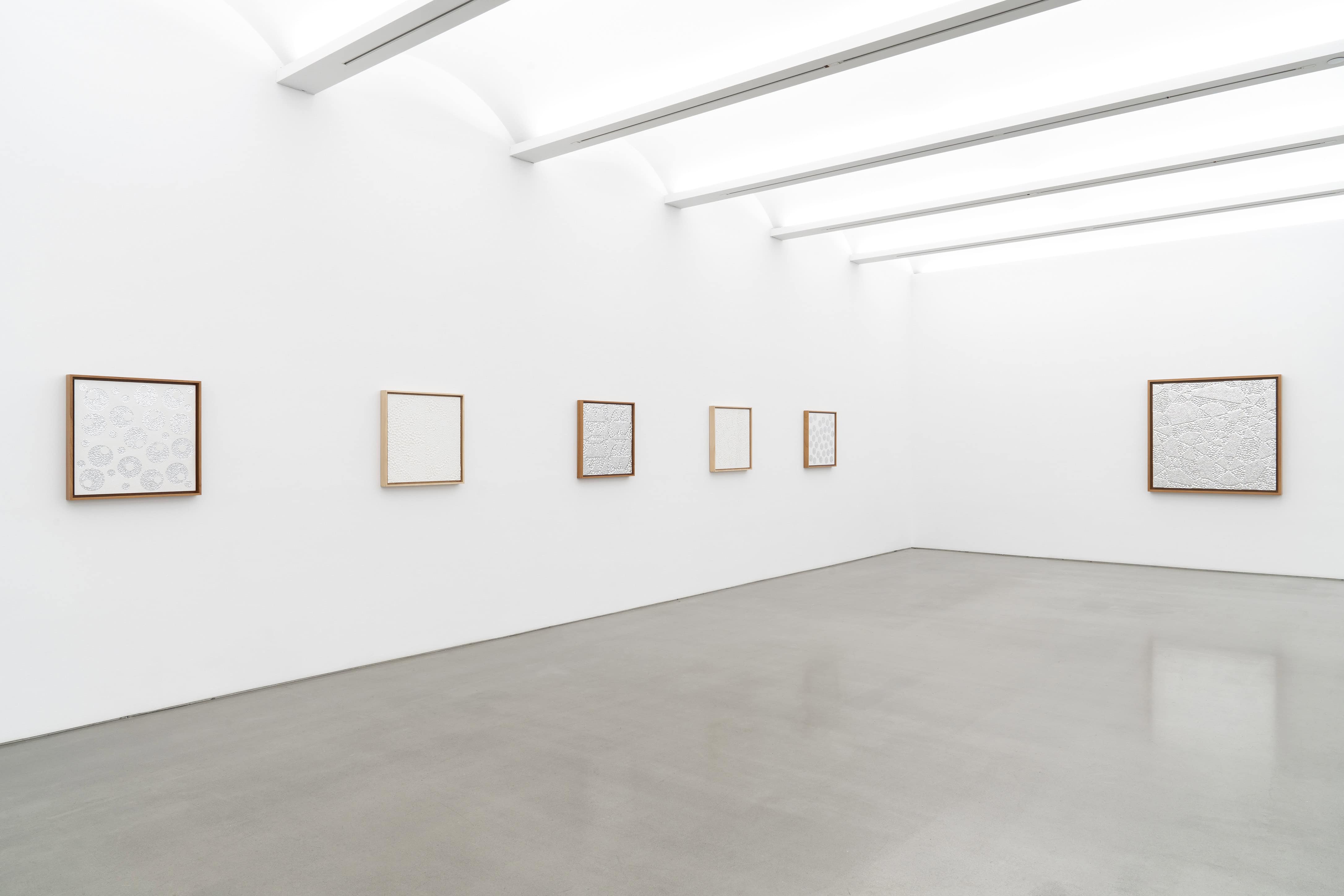
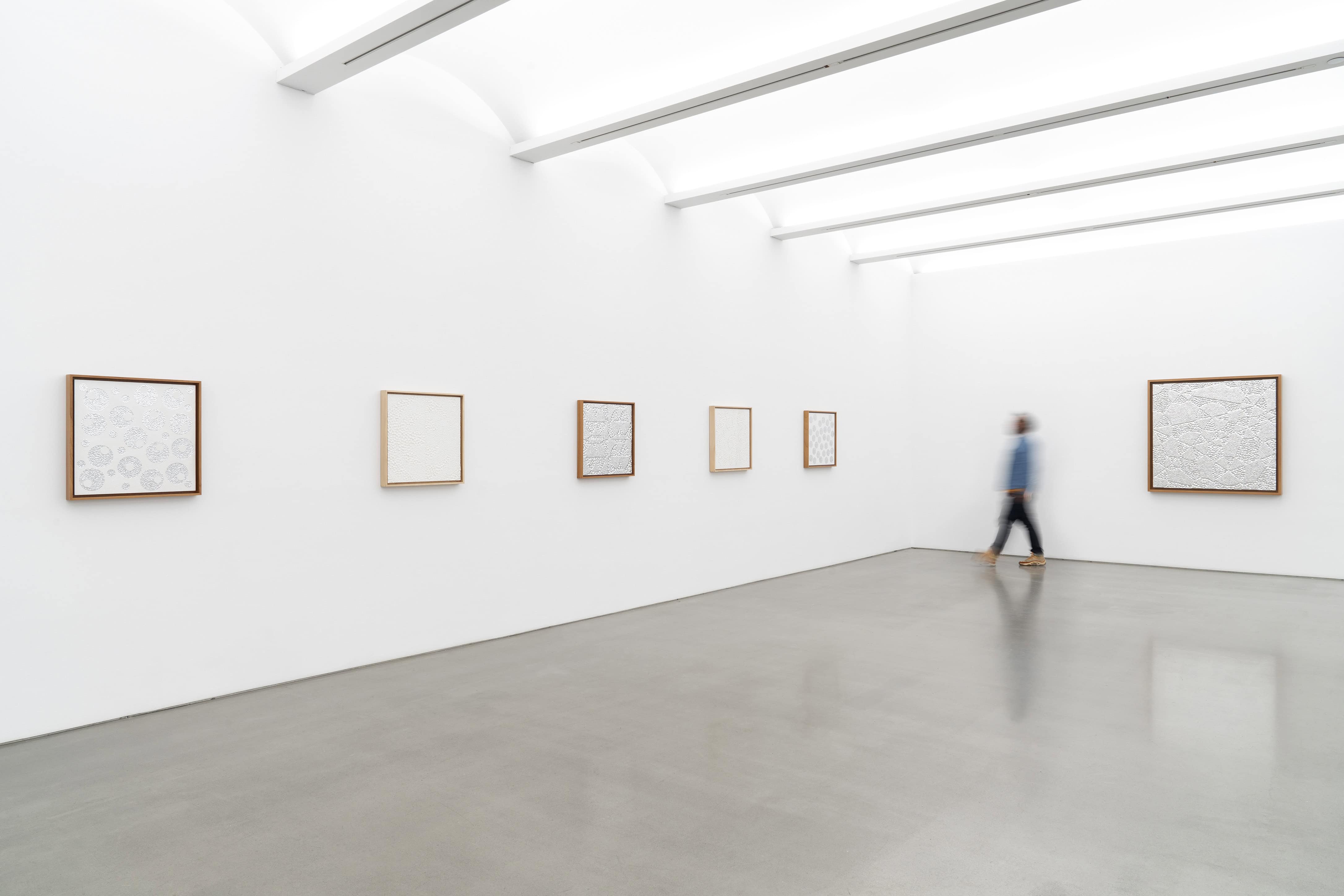
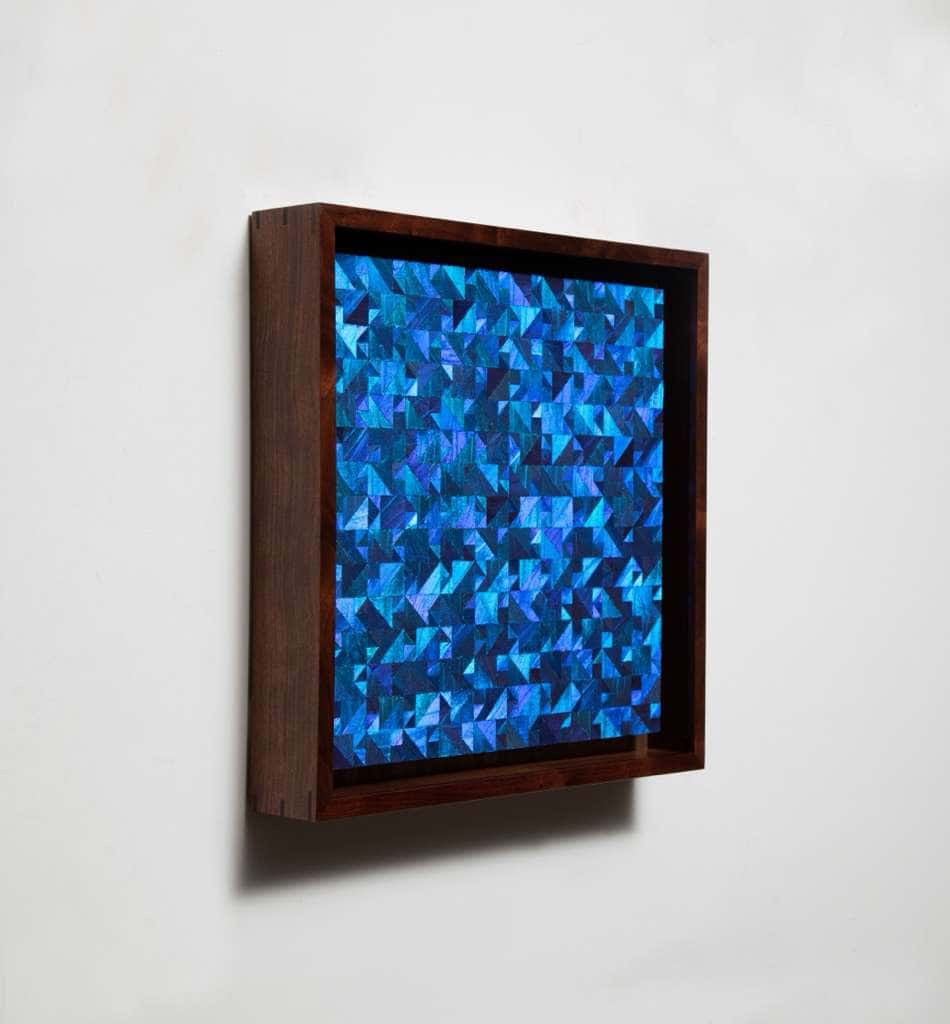
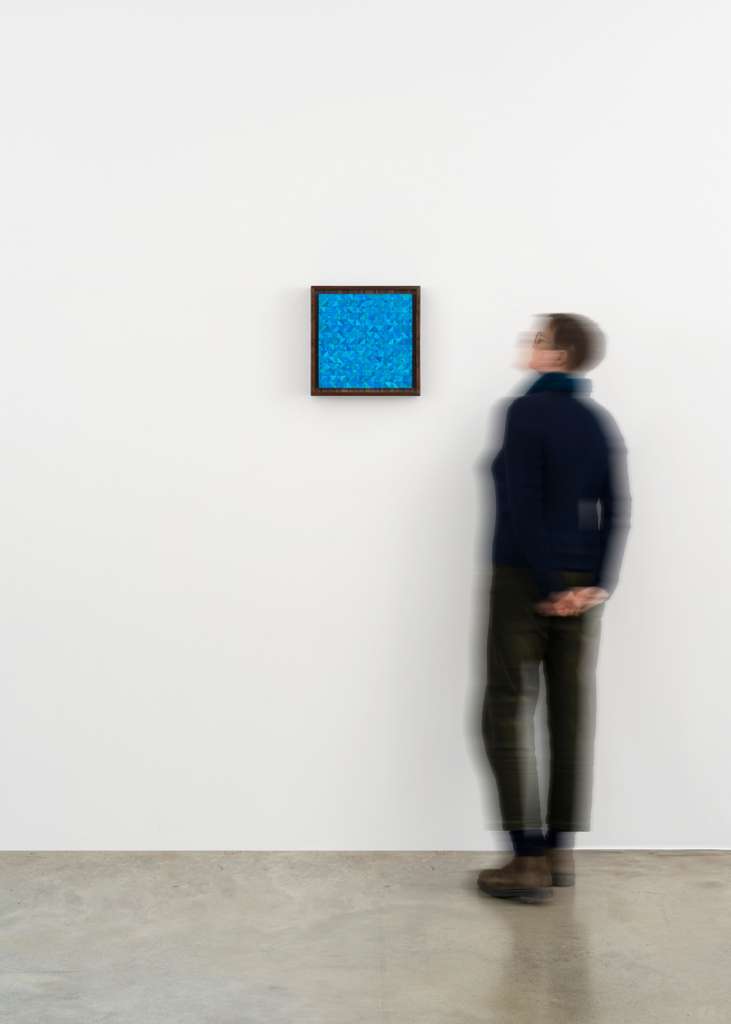
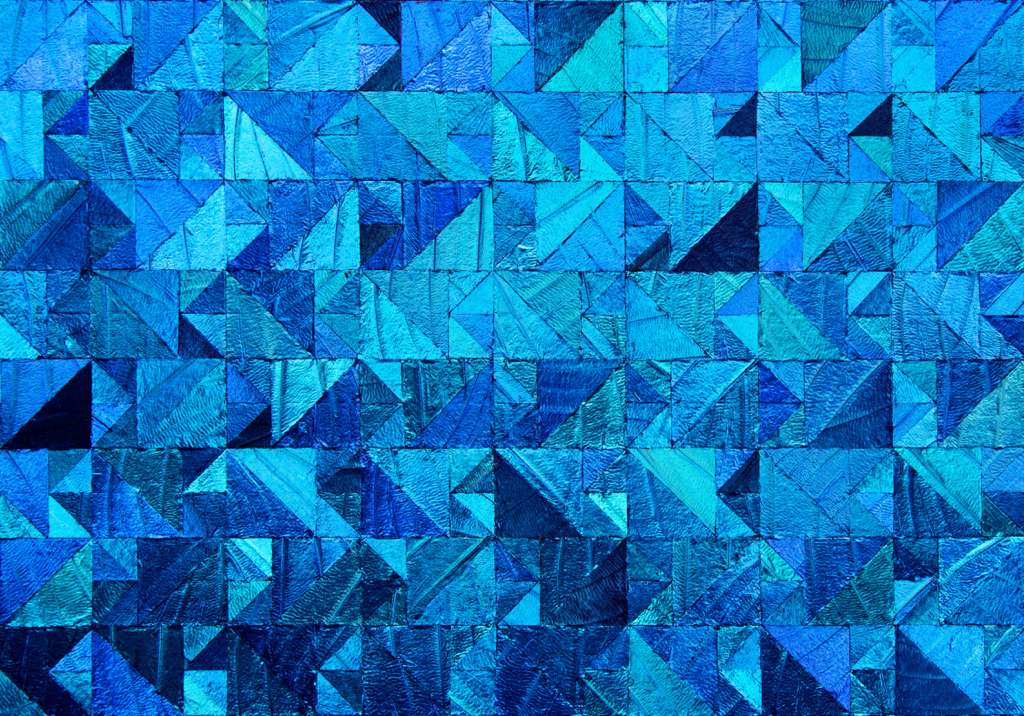
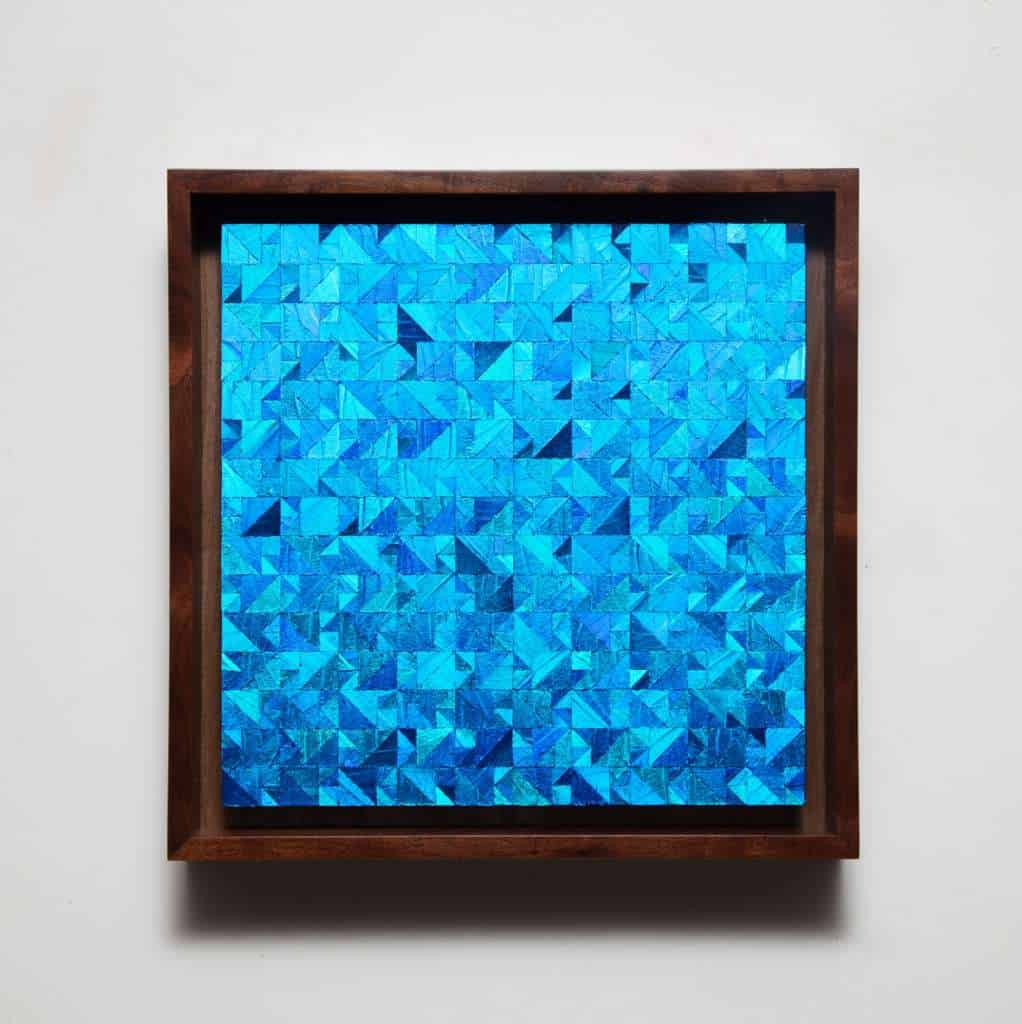
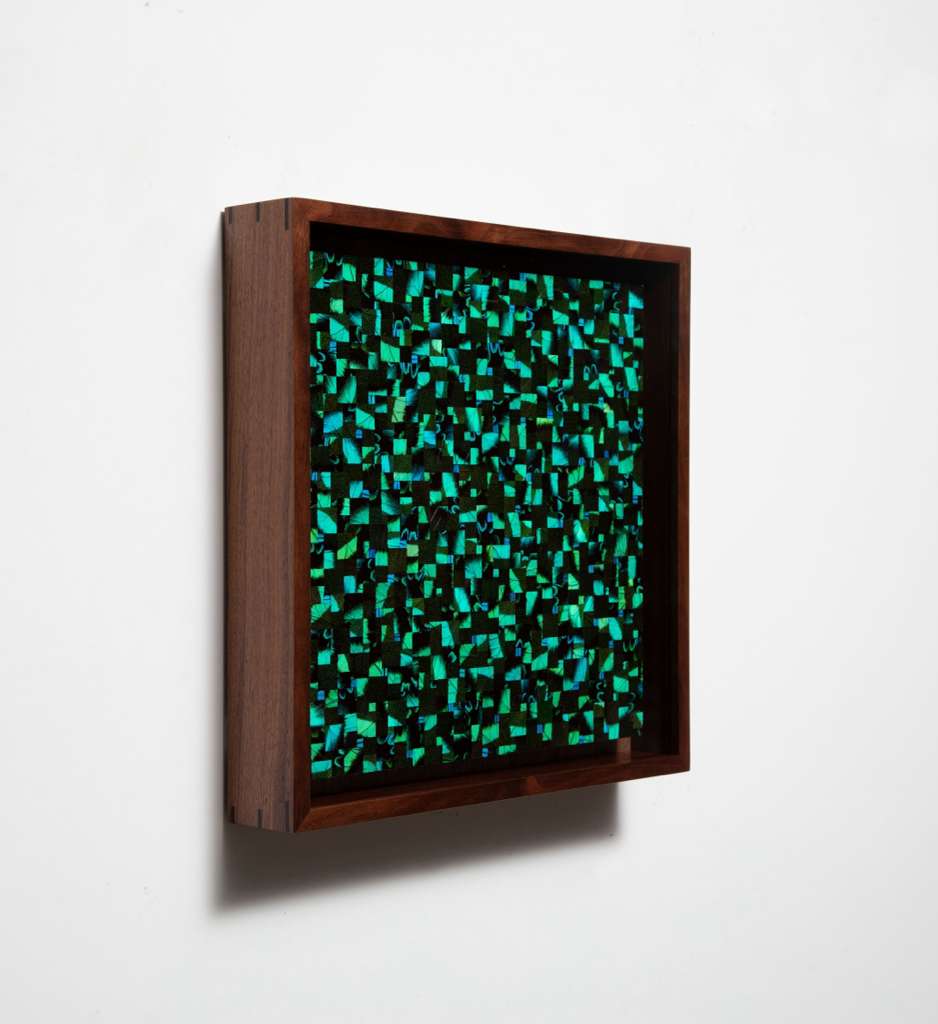
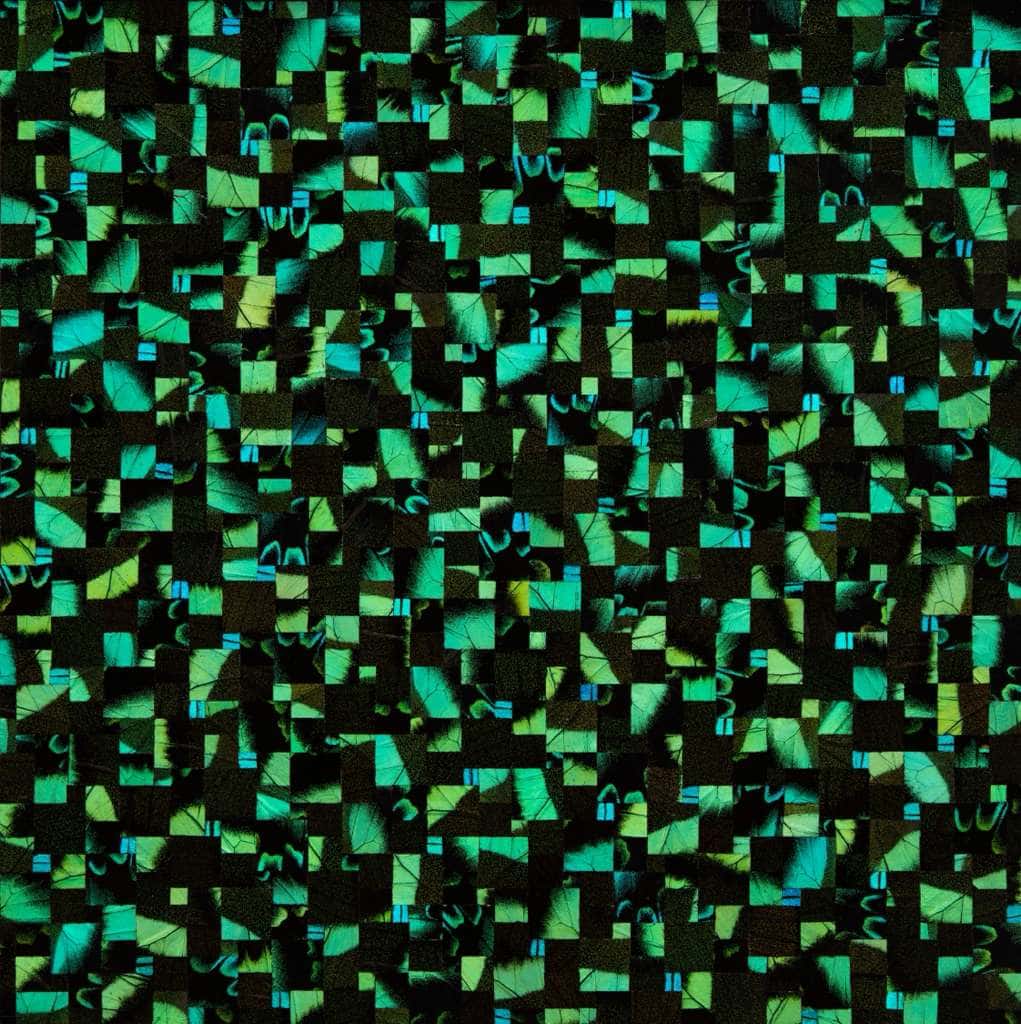
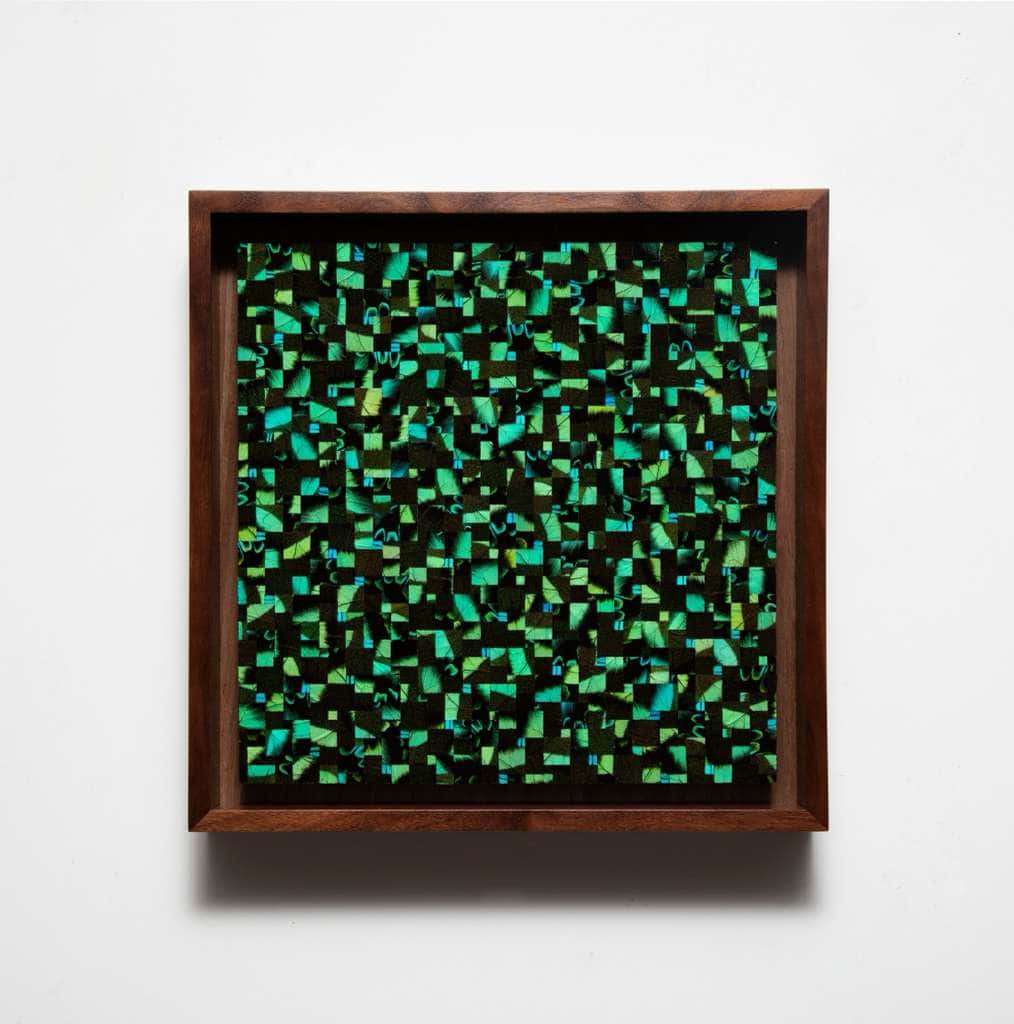
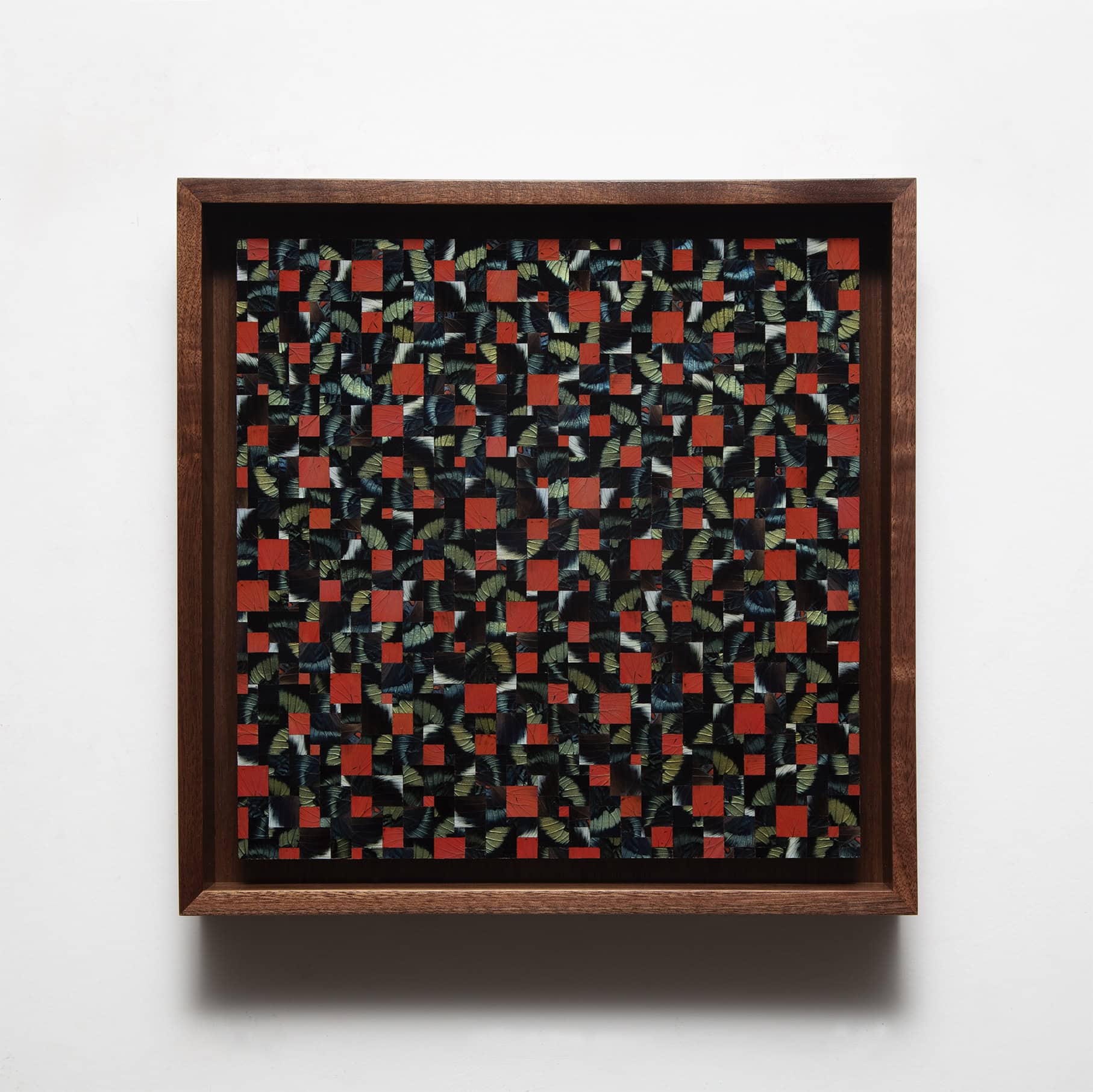
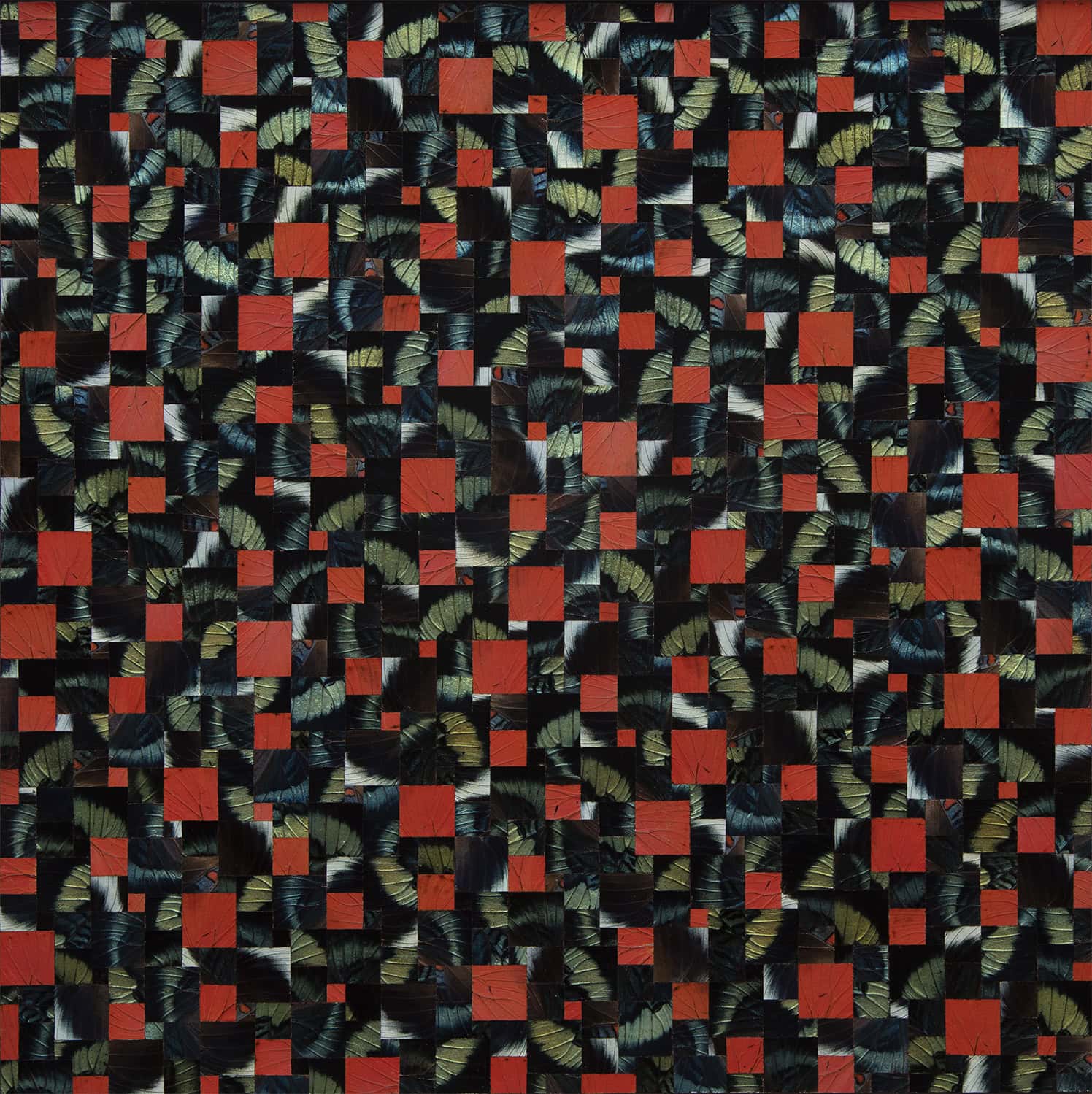
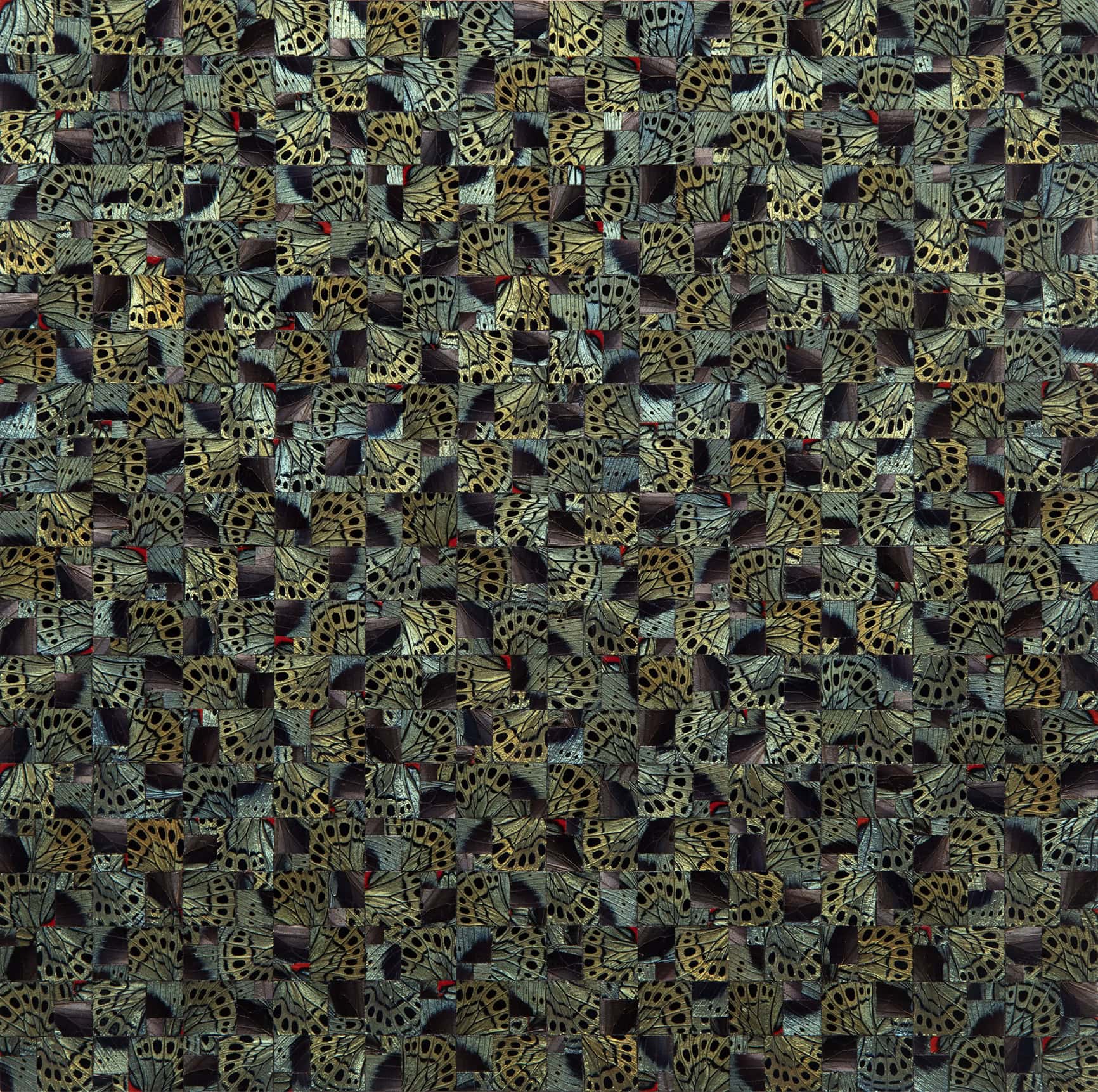
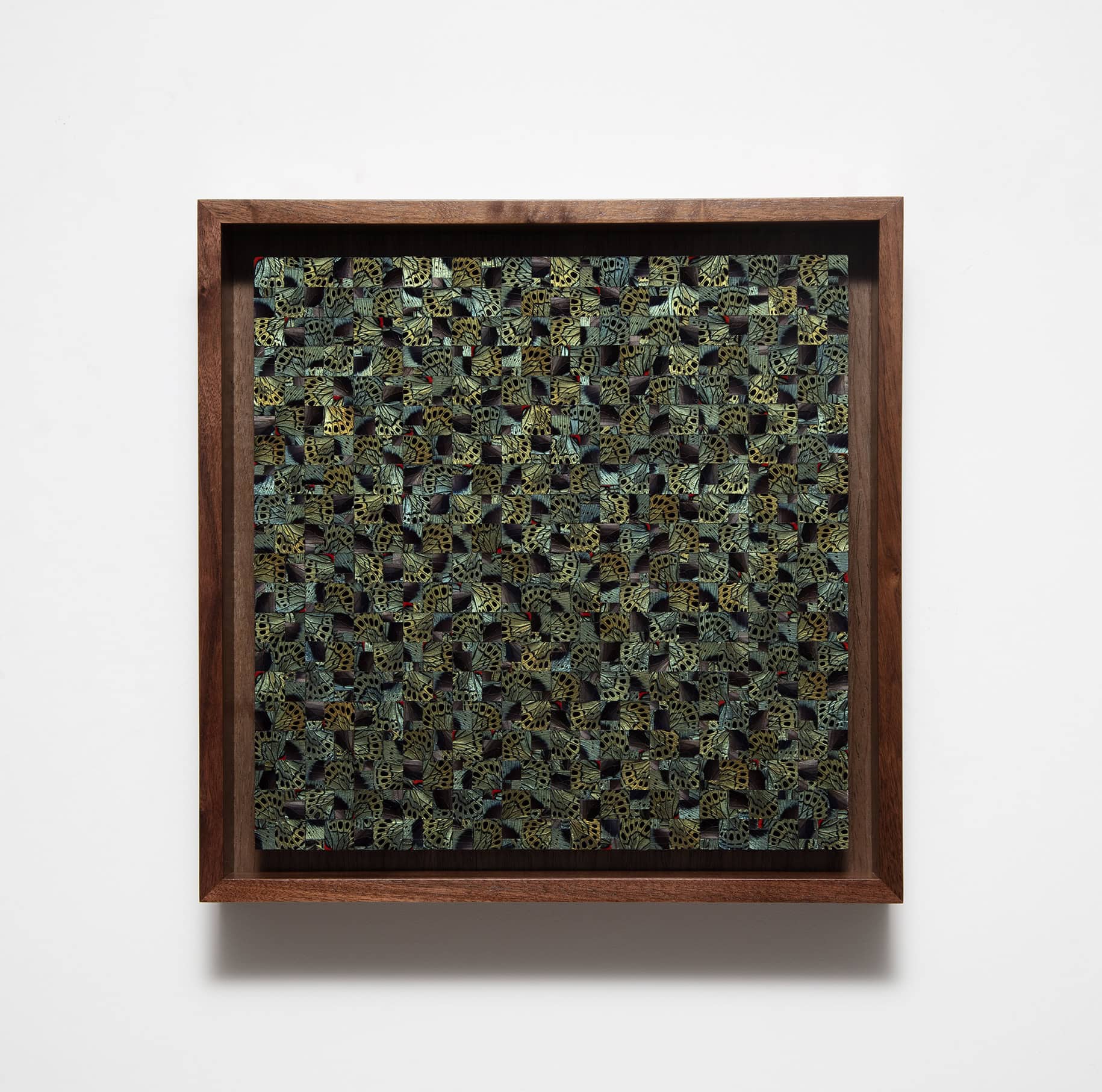
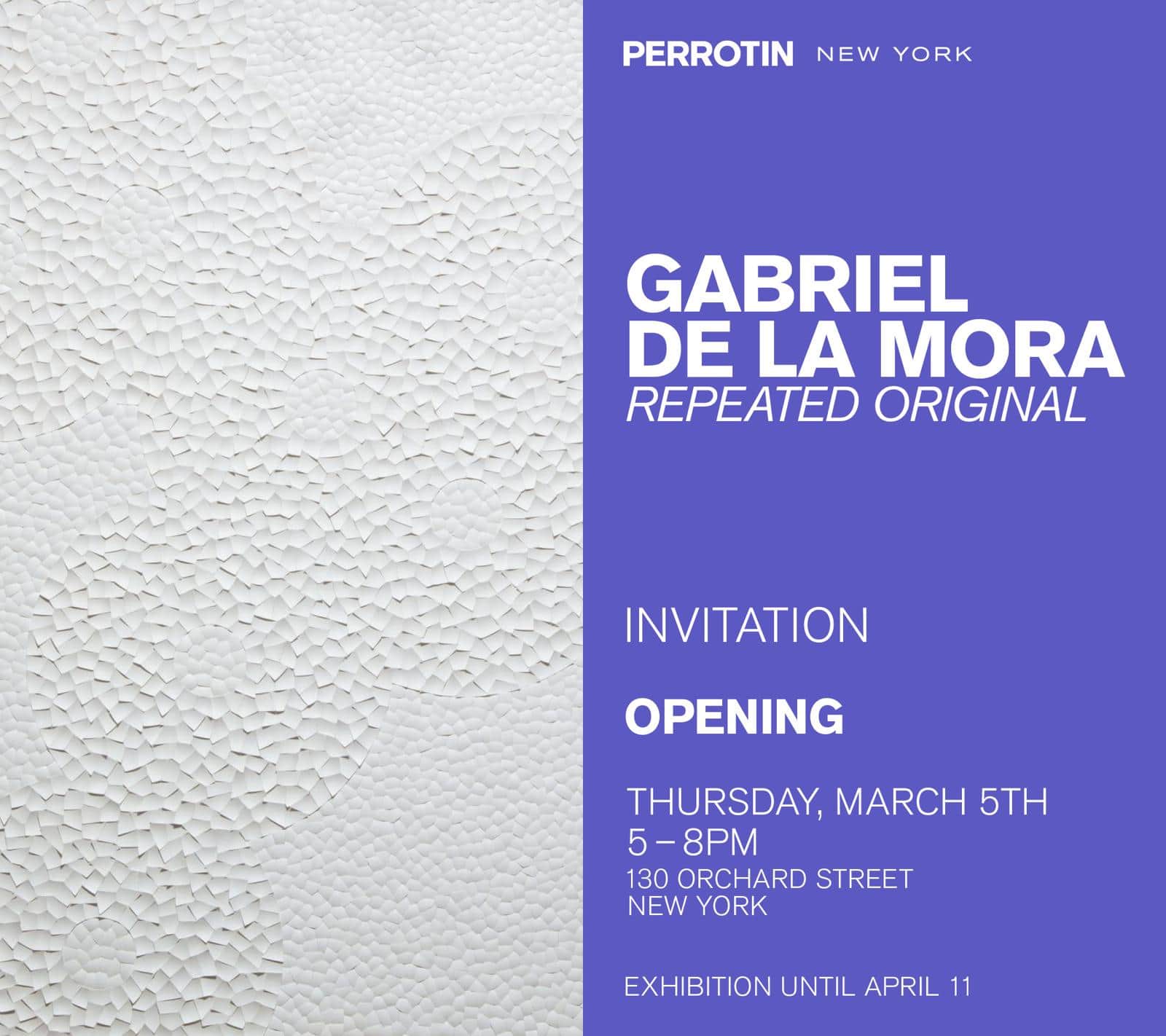
Perrotin is pleased to present Repeated Original by Gabriel de la Mora. Throughout his career, the artist has developed an exploration of painting without paint: planes that retain pictorial qualities but dispense with the pigments traditionally associated with the medium. In this pursuit, he has worked with materials taken directly from nature—human hair, butterfly wings, bird feathers, obsidian, andesite—as well as repurposed materials—shoe soles, bicycle inner tubes, glass microscope slides. Far from neutral, these materials carry histories, whether embedded in their DNA, in their chemical composition, or the marks left by use and wear.
Photos by: Guillaume Ziccarelli
Courtesy the artist and Perrotin
ARCOmadrid
March 4 – 8
IFEMA MADRID, HALL 7
BOOTH 7B08
Perrotin is pleased to return to ARCOmadrid with a selection of recent works by artists from the gallery’s roster.
On this occasion, the gallery presents two new paintings by English artist Oli Epp, created especially for the fair. Born in 1994 in London, Oli Epp’s paintings circulate a number of themes to do with the tragicomic element of living in the 21st century society, dealing with the complexity of identity and anxieties living in the digital age; consumerism and consumption which leads to control and addiction, anxiety and conflict. The paintings work in an endlessly cyclical way of Epp ironically questioning idealisms and our pursuit of perfection.
Among the artists presenting new paintings are Spanish artist Cristina BanBan, who recently held a solo exhibition at the Alhambra’s Museum of Fine Arts in Granada, exploring the works and archives of the seminal Spanish poet Federico García Lorca and Chinese artist Xiyao Wang, who recently had a solo exhibition at our gallery in Dubai.
In addition, the booth features a painting by Danielle Orchard from her series centered on depictions of motherhood, ahead of her solo exhibition at Perrotin Paris, as well as a painting by Sigrid Sandström in advance of her first solo exhibition at Perrotin London.
Finally, the booth includes recent works by Jean-Marie Appriou, Iván Argote, Daniel Arsham, Anna-Eva Bergman, Sophie Calle, Gabriel de la Mora, Mathilde Denize, Jens Fänge, Gelitin, Laurent Grasso, Thilo Heinzmann, Gregor Hildebrandt, Susumu Kamijo, Izumi Kato, Bharti Kher, Takashi Murakami, Jean-Michel Othoniel, Christiane Pooley, Gabriel Rico, Jesús Rafael Soto, Kathia St. Hilaire, Tavares Strachan, Xavier Veilhan, Bernar Venet, Pieter Vermeersch.
GSTAAD ART FAIR – GSTAAD, SWITZERLAND
MAZE / ART GSTAAD
JEAN-MARIE APPRIOU, GENESIS BELANGER, ANNA-EVA BERGMAN, MAURIZIO CATTELAN, LYNN CHADWICK, JOHAN CRETEN, GABRIEL DE LA MORA, JEAN-PHILIPPE DELHOMME, JENS FÄNGE, BERNARD FRIZE, LAURENT GRASSO, GREGOR HILDEBRANDT, KLARA KRISTALOVA, LEE BAE, TAKASHI MURAKAMI, OTANI WORKSHOP, JEAN-MICHEL OTHONIEL
FEBRUARY 19, 2026 – FEBRUARY 22, 2026
|
FEBRUARY 26 – MARCH 1 |
|
Featured Artists Include |
Bharti Kher
Gabriel de la Mora Mr. X Takashi Murakami Takashi Murakami Jean-Michel Othoniel Paul Pfeiffer Paola Pivi Gabriel Rico Mark Ryden Cinga Samson AYA TAKANO Pieter Vermeersch |
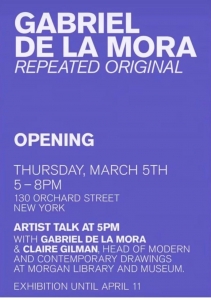
OPENING
THURSDAY, MARCH 5TH 5 – 8PM
130 ORCHARD STREET
NEW YORK
EXHIBITION UNTIL APRIL 11
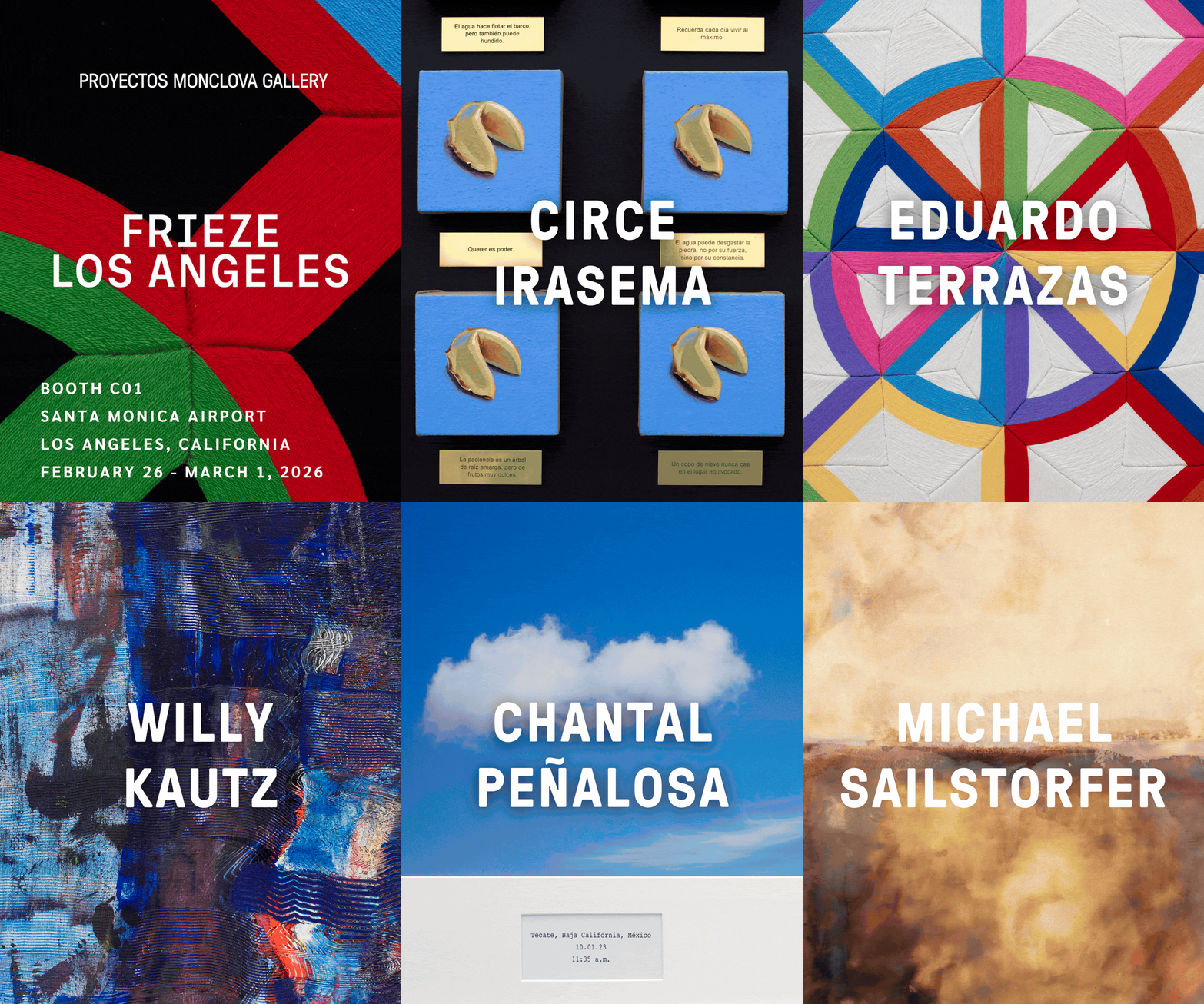
Proyectos Monclova Gallery is pleased to announce its participation in Frieze Los Angeles 2026, where the gallery will present a curated group exhibition featuring works by Gabriel de la Mora, Eduardo Terrazas, Chantal Peñalosa, Circe Irasema, Michael Sailstorfer, and Willy Kautz.
For this year’s edition, the gallery presents for the first time at Frieze L.A. a curated group presentation. The exhibition brings together artists whose practices explore perception, identity, and material transformation, with a strong emphasis on abstraction, reflection, and conceptual inquiry. The presentation reflects the diversity, rigor, and experimental spirit of the gallery’s program.
Following meticulous and self-created methodologies, Gabriel de la Mora researches, collects, classifies, catalogs, and manipulates remarkably diverse materials. These materials are familiar, sourced from quotidian objects—his ongoing series The weight of thought, for example, repurposes leather and rubber shoe soles. de la Mora’s materials of choice are those often considered waste or residue: collected artifacts and antiques, obsolete mechanical and utilitarian objects, parts, corporeal matter, architectural scrap. Through these, the artist explores finitude and permanence, the passing of time, it’s bracketing, and the transformation of matter and energy alike. The formal outcome of these processes plays with pre-established notions of drawing, painting, and sculpture. Characterized by their visual potency, the resulting bodies of work complicate theoretical and historical art terms (the ready-made, the objet-trouvé, the monochrome, the peinture en plein air, among others). As such, they establish an ironic spin on the abstract and minimalist aesthetics and inquire about the ever-changing notion of painting as a phenomenon. Can painting originate itself with the passing of time and without any intervention from the artist’s hand? This apparent negation of painting and other ontological musings formulated by de la Mora’s oeuvre is extended to artistic practice at large: When is an artwork born and when does it reach its conclusion? What is the role of the artist within the creative act? Coupled with equally methodical and strict processes, Gabriel de la Mora has constituted a practice in which the role of the artist is not to create nor to destroy, but to transform.
Gabriel de la Mora was born on September 23, 1968 in Mexico City, where he lives and works. He earned an MFA in Painting (2001-03) from Pratt Institute, NY and a BFA in Architecture (1987-91) from Universidad Anáhuac del Norte, Mexico City. He has been a Fulbright García-Robles grant recipient, a grantee from the Jacques and Natasha Gelman Foundation, and a member of the National System of Creators-FONCA (2013-15), Mexico.
His work is part of public and private collections in Mexico and abroad, among them: Fundación/Colección JUMEX, Museo de Arte Contemporáneo Internacional Rufino Tamayo, Museo de Arte Carrillo Gil, Museo Universitario Arte Contemporáneo-MUAC, and Museo de Arte Moderno, Mexico City; Museo Amparo, Puebla, Mexico; Museum of Contemporary Art-MOCA, Los Angeles, CA; The Museum of Fine Arts, Houston, TX; El Museo del Barrio, NYC, NY; Albright-Knox, Buffalo, NY; Perez Art Museum, Miami, FL; Speed Art Museum, Louisville, KY; Centro Gallego de Arte Contemporáneo, Santiago de Compostela; Colección Banco de la República and Museo de Arte Moderno de Bogotá, Bogotá; Museo de Arte Latinoamericano-MALBA, Buenos Aires, M+ Hong Kong, China.
He is represented by PROYECTOS MONCLOVA (Mexico City),PERROTIN (Paris, New York, Seoul, Tokyo, Shanghai, and Hong Kong), Sicardi Ayers Bacino (Houston) and Simões de Assis (Curitiba, Brazil)